Why Concentration Is Often the Missing Step
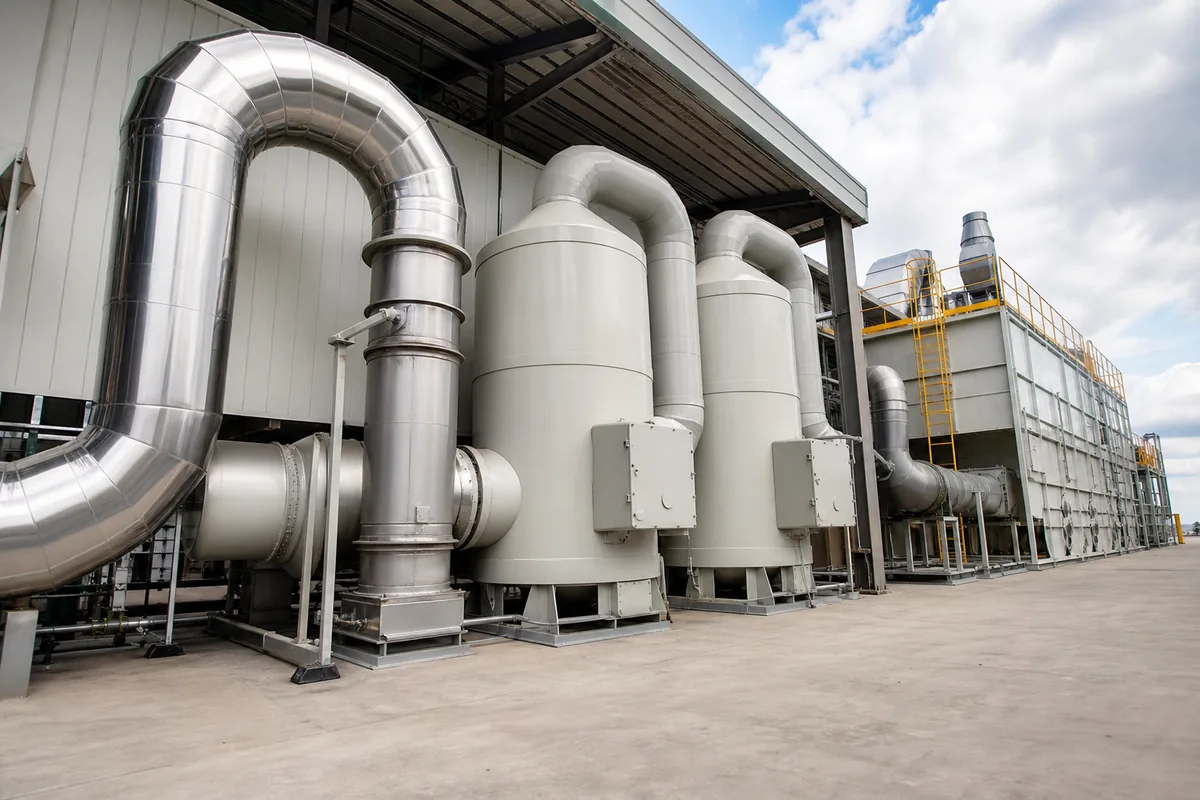
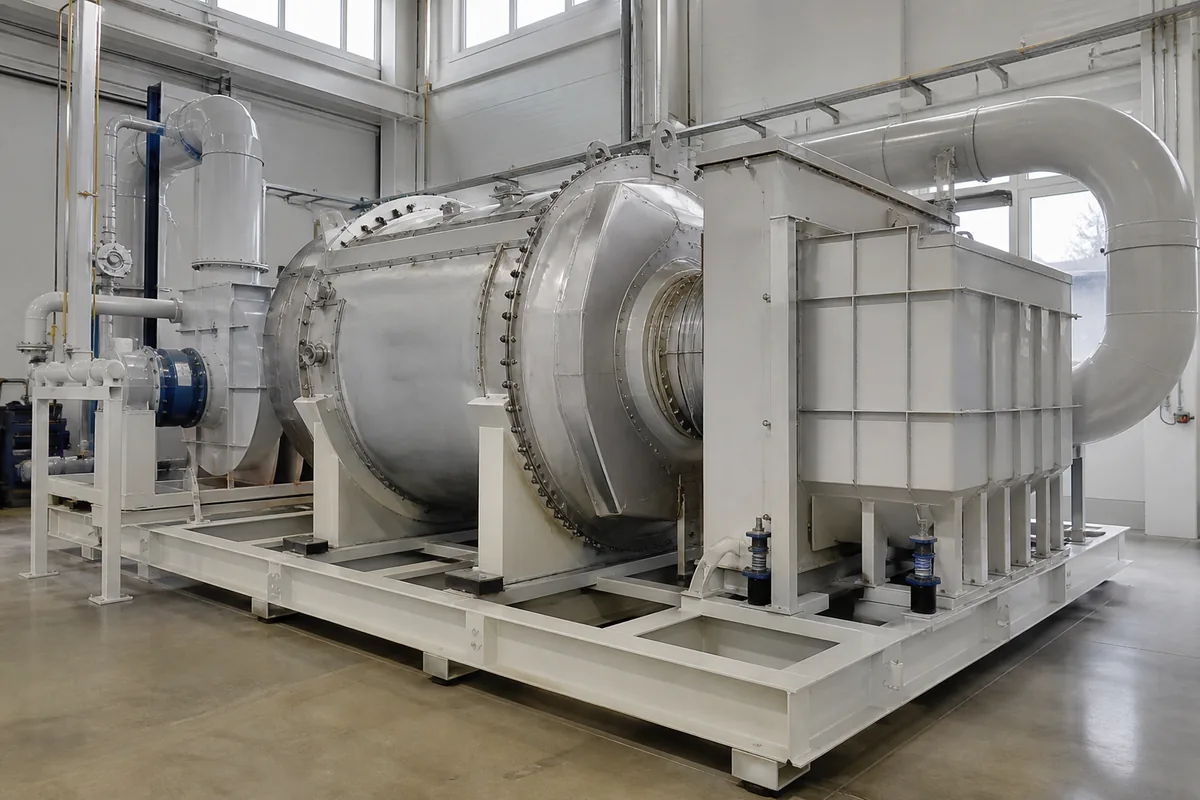
A zeolite rotor concentrator is not a VOC destruction device by itself. It is a front-end concentration system. Its job is to take a large volume of low-concentration VOC exhaust and convert it into a much smaller volume of higher-concentration gas. This concentrated stream is then treated by an RTO, catalytic oxidizer, condenser, or other final abatement unit.
This matters because many factories have VOC exhaust with these characteristics:
- Large air volume: often 20,000–300,000 m³/h
- Low VOC concentration: commonly 50–1,000 mg/m³
- Continuous or long operating hours
- Solvents such as toluene, xylene, ethyl acetate, IPA, MEK, or mixed coating vapors
- Temperature normally below 40–45°C
- Relative humidity often below 70–80% RH, depending on VOC and rotor design
For this type of exhaust, direct thermal destruction can be technically effective but oversized and energy-heavy. The oxidizer must heat all the exhaust air, even though the VOC mass is small. A zeolite rotor concentrator reduces this burden by concentrating VOCs into a smaller desorption air stream, typically 1/5 to 1/20 of the original air volume.
For example:
`text Process exhaust: 100,000 m³/h at 300 mg/m³ VOC VOC mass flow = 100,000 × 300 / 1,000,000 = 30 kg/h
With 10:1 concentration ratio: Desorption air = about 10,000 m³/h Concentrated VOC = about 3,000 mg/m³, before losses and design margin `
The VOC mass is almost the same, but the destruction unit sees only about one tenth of the airflow. This can reduce oxidizer size, fuel consumption, fan power, duct size, and foundation space.
Rotor Concentrator Versus Direct Destruction
The main question is not “Which technology is better?” The correct question is: Which arrangement matches the exhaust volume, VOC concentration, solvent type, and operating pattern?
Direct destruction means the full exhaust stream goes to an oxidizer, usually an RTO, TO, or catalytic oxidizer. Concentration plus destruction means the main exhaust passes through the zeolite rotor first, and only the concentrated desorption stream goes to final destruction.
| Item | Direct destruction only | Zeolite rotor concentrator + destruction |
|---|---|---|
| Best fit | Medium/high VOC concentration, moderate airflow | Low VOC concentration, high airflow |
| Typical inlet airflow | Usually economical below about 30,000–60,000 m³/h, depends on VOC heat value | Often used for 30,000–300,000+ m³/h |
| Typical VOC concentration | Often better above 1,000–2,000 mg/m³ | Often useful at 50–1,000 mg/m³ |
| Oxidizer size | Sized for full exhaust volume | Sized for desorption air, often 5–20% of main flow |
| Energy use | High when VOC concentration is low | Lower when concentration ratio is suitable |
| System complexity | Simpler | More equipment, more controls |
| Sensitivity | Less sensitive to some particulates and humidity | Needs filtration, temperature and humidity control |
| Maintenance focus | Burner, heat exchanger/ceramic bed, valves | Rotor, seals, filters, desorption heater, plus oxidizer |
A useful rule of thumb: if the exhaust is large-volume and below about 800–1,000 mg/m³ VOC, concentration should be considered. If the exhaust is already small-volume and high-concentration, direct destruction is often simpler.
However, the VOC mixture matters. Some compounds adsorb well on zeolite; others require careful evaluation. Very light, highly volatile compounds may have lower adsorption efficiency. High-boiling or sticky organic vapors may create rotor fouling risk. Silicone, resin mist, oil mist, tar, paint particles, and acid mist must be controlled before the rotor.
How the Zeolite Rotor Concentrator Works
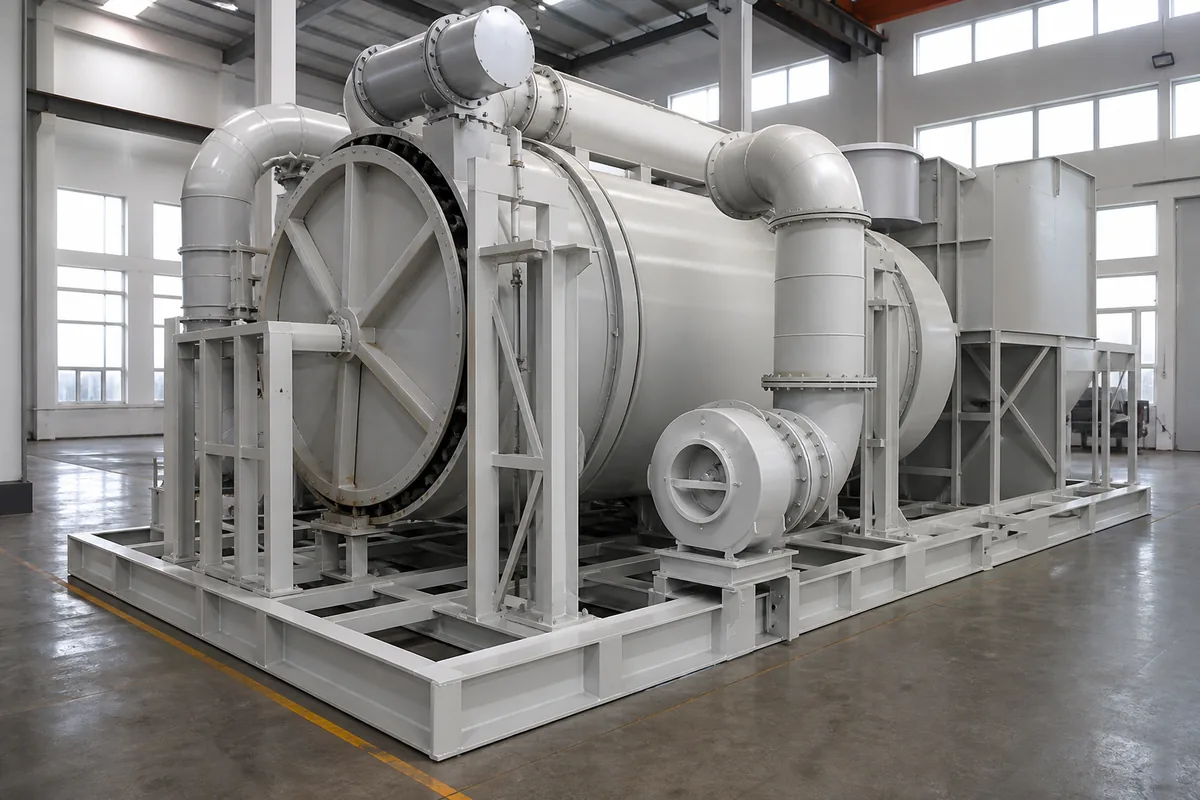
A typical zeolite rotor concentrator has three zones:
- Adsorption zone
The main VOC exhaust passes through the rotor. VOC molecules are adsorbed into the hydrophobic zeolite structure. Cleaned air leaves through the stack or goes to further polishing if needed.
- Desorption zone
A smaller hot air stream, usually 160–220°C, passes through part of the rotor. The heat releases the adsorbed VOCs, creating a concentrated gas stream.
- Cooling zone
A small air stream cools the rotor before it returns to adsorption service. This improves adsorption capacity and stabilizes outlet concentration.
The rotor rotates slowly, often around 2–6 revolutions per hour, depending on design. The rotation speed affects adsorption time, desorption completeness, outlet VOC stability, and energy use.
Important design parameters include:
- Face velocity through rotor: commonly 1.5–3.0 m/s
- Concentration ratio: commonly 5:1 to 15:1, sometimes up to 20:1
- Desorption temperature: commonly 180–200°C for many solvent mixtures
- Inlet particulate control: usually filtration to protect rotor channels
- Main exhaust temperature: preferably below 40°C for good adsorption
- Humidity: lower is better; high humidity may reduce effective capacity
The concentration ratio is calculated as:
`text Concentration ratio = Main process airflow / Desorption airflow `
Example:
`text Main airflow = 80,000 m³/h Desorption airflow = 8,000 m³/h Concentration ratio = 10:1 `
The final VOC concentration after the rotor is not exactly the inlet concentration multiplied by the ratio. It depends on adsorption efficiency, desorption efficiency, leakage, rotor material, solvent mix, humidity, and temperature. For early estimation, engineers may use:
`text Concentrated VOC ≈ Inlet VOC × Concentration ratio × 0.8 to 0.95 `
The factor is only a rough allowance. Final design should use solvent data and safety review.
When Concentration Gives the Biggest Advantage
A zeolite rotor concentrator is most useful when destruction equipment is limited by airflow rather than VOC mass. Typical industries include coating, printing, electronics, lithium battery materials, plastic film, packaging, automotive parts, furniture coating, and adhesive processes.
Good candidate conditions include:
- VOC concentration usually below 1,000 mg/m³
- Large total exhaust volume from many booths, ovens, or production lines
- Continuous operation, often 8–24 hours/day
- Solvents with reasonable adsorption on zeolite
- Exhaust free of heavy dust, oil mist, resin aerosol, and corrosive mist
- Process airflow that can be balanced and controlled
- Available space for rotor module, filters, fans, ducting, and oxidizer
The energy advantage can be significant. Consider a simplified comparison.
A direct RTO treating 100,000 m³/h must heat and move the full volume. If the exhaust VOC concentration is only 300 mg/m³, the VOC heat contribution is limited. Auxiliary fuel may be needed, especially during low-load periods.
With a 10:1 zeolite rotor concentrator, the oxidizer treats about 10,000 m³/h. The VOC concentration entering the oxidizer may be around 2,400–2,850 mg/m³, depending on efficiency. The oxidizer is smaller and may operate closer to a stable thermal balance.
This does not mean the system is always self-sustaining. That depends on solvent lower heating value, oxidizer heat recovery, fresh air dilution, heat loss, and operating schedule. But concentration normally improves the energy balance.
Limits, Risks, and Design Checks
A zeolite rotor concentrator is not a universal solution. It adds moving parts, hot desorption air, seals, controls, and pre-treatment needs. The following checks are important before selection.
1. VOC safety concentration
The concentrated stream must stay safely below its lower explosive limit. A common engineering rule is to keep normal operating concentration below 25% of LEL, or lower if required by the plant’s safety practice. For mixed solvents, use a conservative mixture calculation.
`text %LEL mixture ≈ Sum of (Ci / LELi) × 100% `
Where Ci and LELi are in the same units, usually ppmv.
2. Adsorption suitability
Not all VOCs behave the same. Aromatics and many esters often adsorb well. Alcohols, ketones, and chlorinated solvents need case-by-case review. Very high-boiling compounds may desorb poorly and foul the rotor.
3. Pretreatment
The rotor should be protected from contaminants. Depending on the process, pretreatment may include:
- Bag, cartridge, or panel filters for dust and overspray
- Mist eliminators for oil or liquid droplets
- Cooling coils or dilution air if temperature is high
- Dehumidification or air conditioning for high humidity applications
- Acid/alkali scrubbers before VOC treatment if corrosive gases are present
For example, in a coating line, overspray particles can block rotor channels and increase pressure drop. A multi-stage filter system may be needed before the concentrator.
4. Pressure drop and fan selection
Rotor modules and filters add resistance. Typical clean pressure drop may be roughly:
- Pre-filters: 300–800 Pa, depending on grade and loading
- Rotor: 800–1,500 Pa
- Ducting, dampers, silencers: project-specific
- Total system: often 2,000–4,000 Pa before detailed design
Fan materials must match the gas condition. For corrosive or humid exhaust, PP fans, FRP fans, or stainless steel fans may be considered, depending on temperature and chemistry.
5. Control stability
The system needs stable air balance. Sudden process shutdowns, batch solvent peaks, or booth dampers opening and closing can affect outlet VOC and oxidizer temperature. Variable-frequency fans, VOC monitoring, temperature interlocks, and bypass logic are commonly used.
Practical Next Step
Before comparing equipment sizes, prepare a simple VOC data sheet for each exhaust point:
- Airflow, normal and maximum: m³/h
- Temperature and relative humidity
- VOC components and concentration range
- Operating hours and batch pattern
- Dust, mist, acid, alkali, or oil content
- Available space and duct route
- Existing fans, stacks, scrubbers, or carbon adsorbers
With this data, you can compare direct destruction against a zeolite rotor concentrator plus oxidizer using mass flow, concentration ratio, pressure drop, and safety concentration. If the exhaust is high-volume and low-concentration, concentration is often the key step that makes the whole VOC system smaller and easier to operate.