When “Not Working” Means Different Things
When a plant says a scrubber not working, the first question should be: what is failing? In the field, “not working” may mean one or more of these problems:
- Outlet gas concentration is above the required limit
- Odor is still obvious at the stack or nearby boundary
- Visible mist or white plume is leaving the stack
- Fan current is high or airflow is low
- Pressure drop is higher or lower than normal
- Chemical consumption is too high
- Packing blocks frequently
- Corrosion appears in the fan, duct, tank, or stack
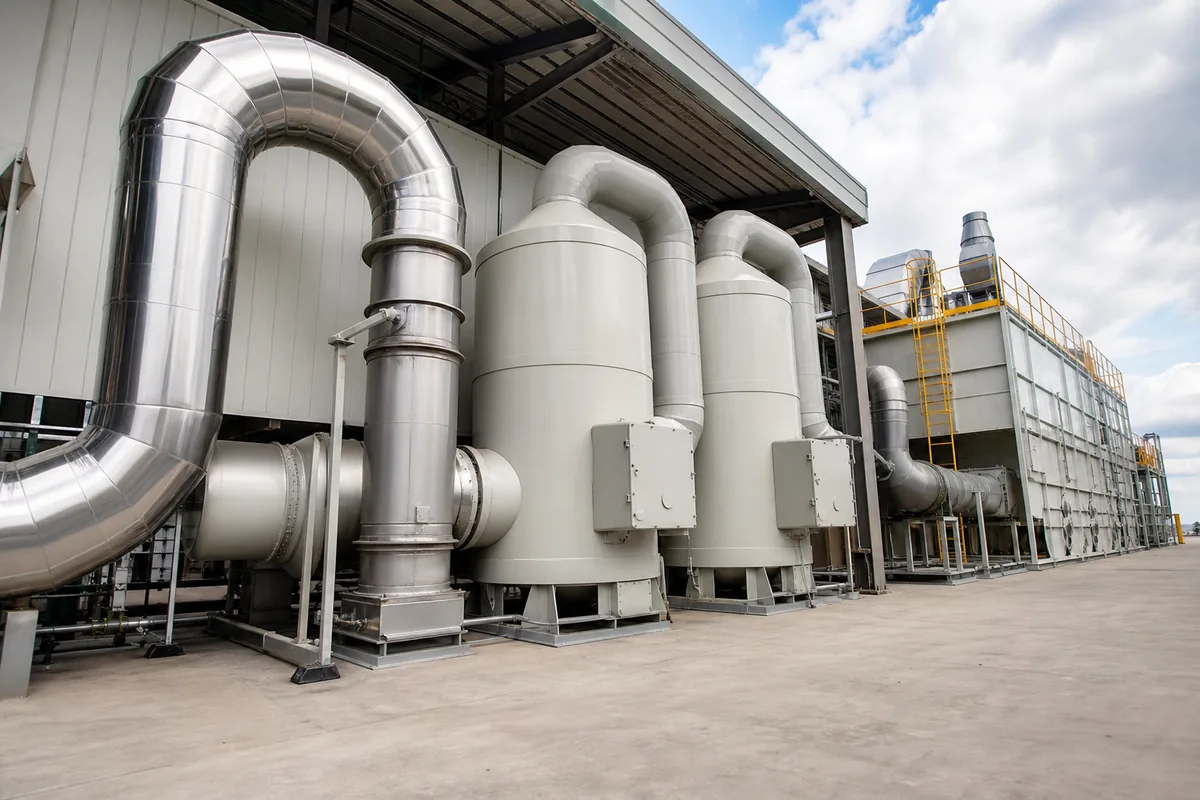
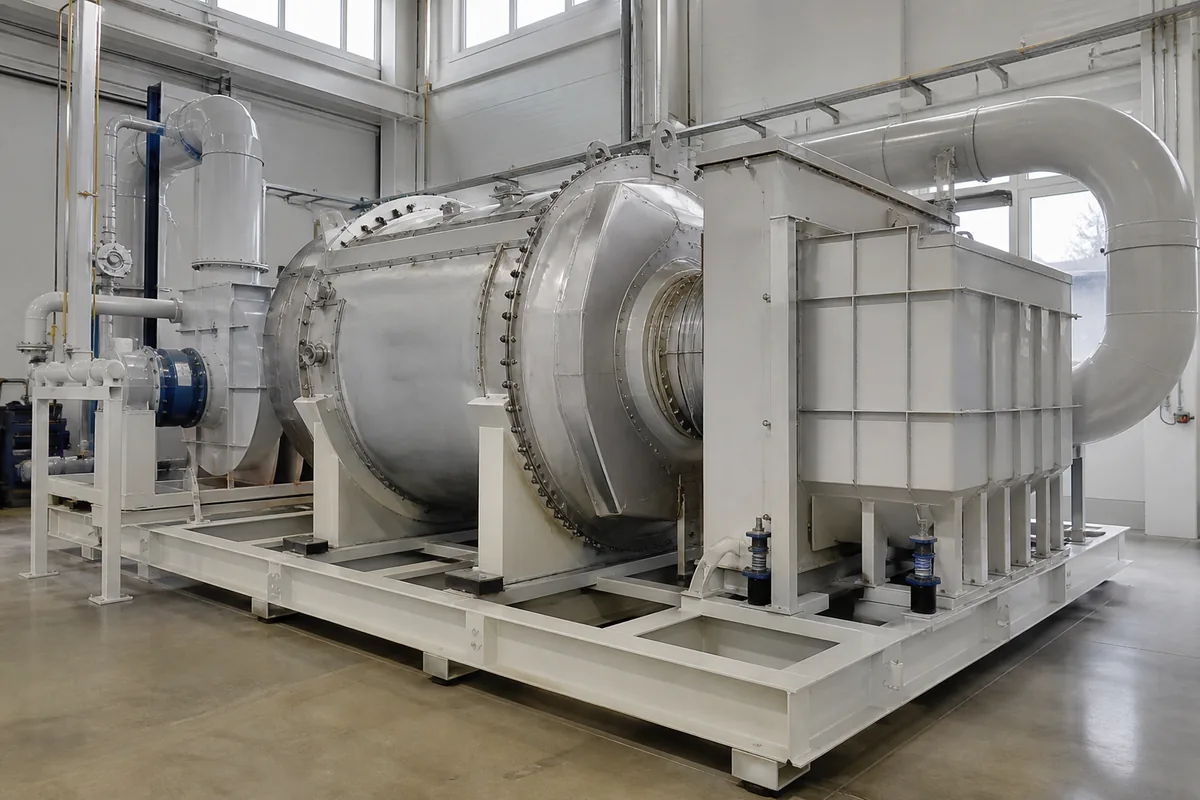
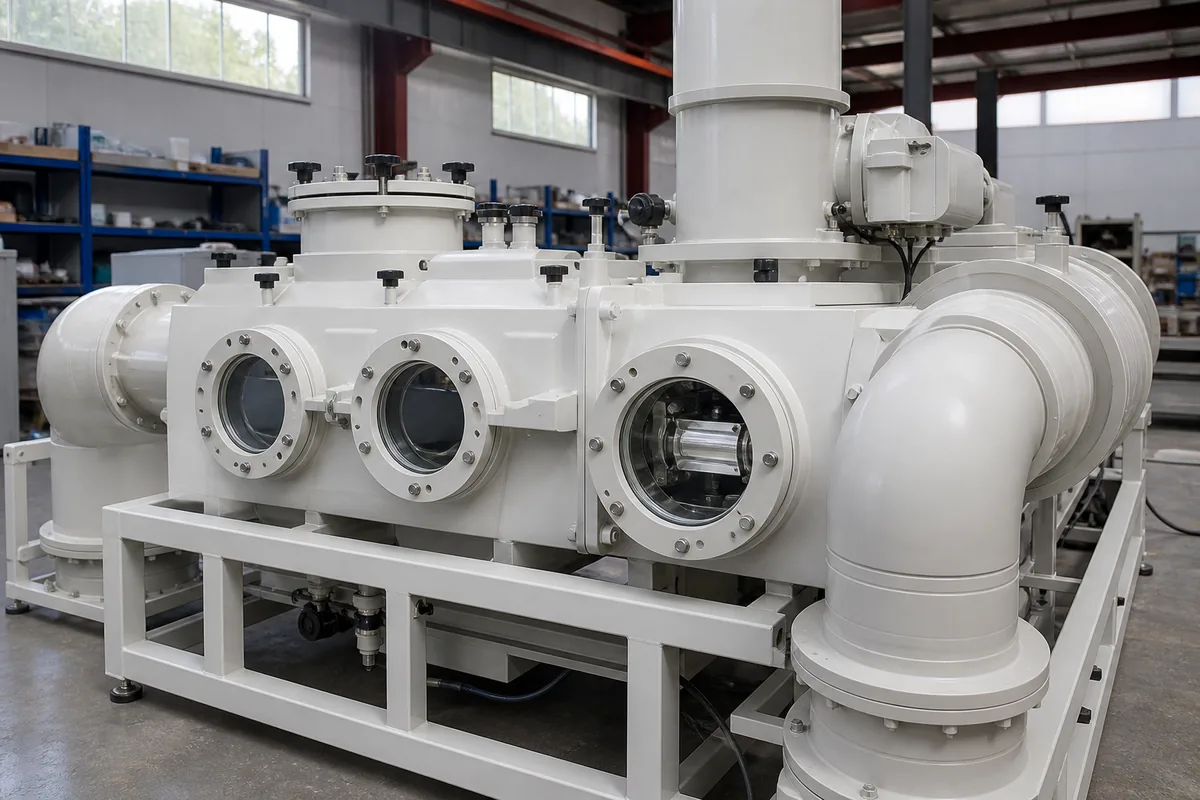
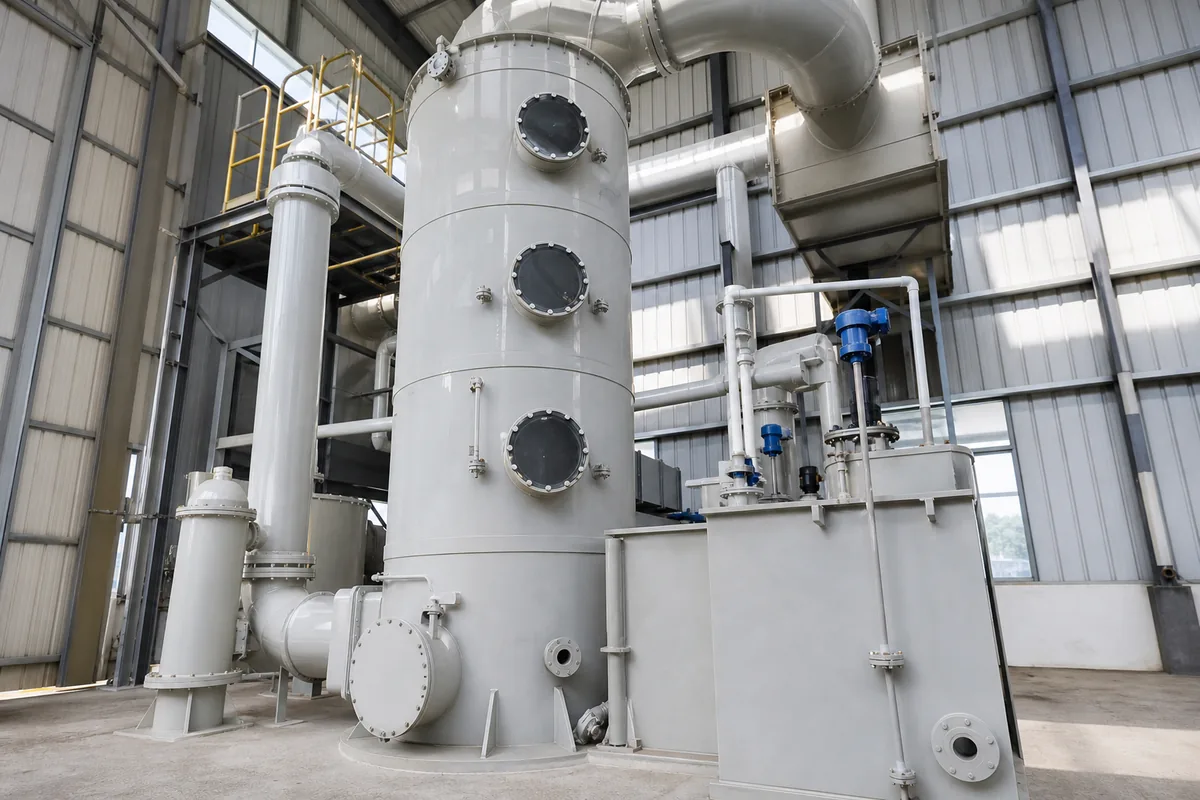
A wet scrubber is not one component. It is a system: hood, duct, fan, recirculation tank, pump, spray nozzles, packing, demister, dosing system, drain, and controls. If one part is wrong, the complete system may fail.
Below are eight common causes we see during design review, installation checking, and troubleshooting of PP packed-bed scrubbers.
1. Airflow Is Not the Design Airflow
Many scrubber problems start with airflow. If airflow is too low, the process hood may not capture the gas. If airflow is too high, gas contact time becomes too short, pressure drop increases, and liquid carryover may occur.
For a packed-bed scrubber, the basic check is:
`text Gas velocity = Actual airflow / Tower cross-sectional area `
Typical superficial gas velocity in a vertical packed tower is often:
- 1.0–2.0 m/s for many acid and alkali gas applications
- 0.8–1.5 m/s where high removal efficiency or low mist carryover is required
- Above 2.2 m/s may be possible in some cases, but pressure drop and entrainment risk increase
The correct value depends on gas type, packing height, removal target, liquid rate, and tower diameter.
Field checks:
- Measure airflow at the inlet duct, not only at the fan nameplate.
- Check whether dampers are fully open or incorrectly adjusted.
- Confirm fan rotation direction.
- Compare fan current with rated current and fan curve.
- Check if the stack outlet has added resistance after installation.
A fan may be mechanically running, but the scrubber may still be underperforming because the actual airflow is 30–50% away from the design point.
2. Wrong Liquid-to-Gas Ratio
The liquid-to-gas ratio, often written as L/G, is a key parameter for absorption. It is usually expressed as:
`text L/G = Recirculation liquid flow (L/min) / Gas flow (m³/min) `
For many packed wet scrubbers, common L/G ranges are:
| Application | Typical L/G Range | Notes |
|---|---|---|
| Acid gas such as HCl, HF | 1.5–3.0 L/m³ | Depends on inlet concentration and required outlet |
| Alkali gas such as NH₃ | 2.0–4.0 L/m³ | Often needs pH control and enough contact time |
| Soluble odor gas | 2.0–5.0 L/m³ | May require oxidant, not only water |
| Dust with soluble gas | 3.0–6.0 L/m³ | Higher liquid rate helps washing but may increase blowdown |
If the pump flow is too low, the packing is not fully wetted. Dry channels form, and gas passes through with little contact. If the flow is too high, pressure drop rises, the demister becomes overloaded, and mist carryover increases.
Do not rely only on pump model. Actual spray flow depends on pump head, pipe loss, nozzle condition, liquid level, and filter blockage. A simple flowmeter on the recirculation line is very useful for operation and troubleshooting.
3. Chemical Dosing and pH Control Are Incorrect
Water alone cannot remove every pollutant effectively. For example:
- Acid gases such as HCl, SO₂, and HF normally need alkaline solution, often NaOH.
- Alkali gases such as NH₃ normally need acid solution, such as diluted sulfuric acid or another suitable acid.
- Some odor compounds may need oxidation, such as NaOCl or other oxidants, depending on the chemistry.
- VOCs with low water solubility are usually not suitable for a simple water scrubber.
A common field problem is that the pH probe is installed but not maintained. The displayed pH may be wrong because of coating, aging, dry storage, or poor calibration.
Useful pH control ranges, depending on gas chemistry, are commonly:
- pH 8.5–10.5 for many acid gas scrubbers
- pH 3–6 for ammonia absorption
- ORP control may be needed for oxidation systems, but the target depends strongly on the pollutant and reagent
Good practice:
- Calibrate pH probes regularly using standard buffer solutions.
- Install the probe where liquid is well mixed, not in a dead corner.
- Use dosing pumps sized for peak load, not only average load.
- Provide chemical dilution and mixing time before the liquid returns to the spray header.
- Check actual chemical consumption against expected mass balance.
A quick mass balance helps identify under-dosing:
`text NaOH required for HCl ≈ HCl mass flow × 40 / 36.5 `
This is the theoretical value. Real consumption is higher because of safety margin, side reactions, blowdown, and control fluctuation.
4. Packing Is Blocked, Collapsed, or Poorly Wetted
Packing provides gas-liquid contact area. If packing is blocked or damaged, the scrubber loses performance quickly.
Common causes include:
- Dust entering without a pre-filter or pre-wash section
- Precipitated salts from poor blowdown control
- Biological slime in warm water systems
- High suspended solids in recirculation liquid
- Incorrect packing material for temperature or chemical condition
- Poor support grid design causing packing collapse
Normal packed-bed pressure drop depends on packing type and gas velocity. As a rough guide, many PP random packing beds operate around:
`text 300–1000 Pa per meter of packing `
This is only a rule of thumb. Fine packing, high gas velocity, high liquid loading, or dirty gas can increase pressure drop.
Warning signs:
- Pressure drop gradually increases week by week
- Liquid level in the tower rises abnormally
- Fan current changes
- Scrubber sprays water from inspection doors or stack
- Removal efficiency decreases even when pH is correct
When packing is removed for cleaning, inspect both the top and bottom layers. The top may look acceptable while the lower layer is compacted with solids.
5. Spray Nozzles Are Plugged or Installed Incorrectly
Spray nozzles are small parts, but they strongly affect performance. A scrubber may have correct pump capacity but poor liquid distribution because half of the nozzles are blocked.
Typical nozzle issues:
- Solid particles block the orifice
- Scale builds up due to hard water
- Nozzle direction is wrong after maintenance
- Nozzle material is not compatible with chemicals
- Spray header has poor layout, leaving dry zones
- Nozzle pressure is outside the recommended range
Many full-cone nozzles used in scrubbers operate around 0.15–0.3 MPa. Some designs use lower or higher pressure. Always check the nozzle curve from the supplier.
A simple inspection method is to open the manway during safe shutdown and run the circulation pump briefly with clean water. The spray pattern should cover the full tower cross-section. Any straight jet, weak cone, or missing spray should be corrected.
Install a strainer before the spray header. For dirty systems, choose a strainer mesh that protects the nozzle but does not block every day. Maintenance access is as important as the mesh size.
6. Gas Composition Changed After Startup
Sometimes the scrubber was correctly designed for the original process, but the process changed. This is common when production increases or new chemicals are introduced.
Examples:
- Acid concentration in the bath increased
- Exhaust temperature increased from 35°C to 60°C
- A new solvent was added upstream
- Intermittent peak emissions became more frequent
- Dust loading increased because a process cover was modified
- Multiple exhaust streams were connected later
The design basis should include at least:
`text Gas flow rate Temperature Moisture Pollutant type Inlet concentration Required outlet concentration Dust or mist content Operating schedule Peak and average load `
A scrubber designed for 100 mg/m³ HCl may not meet the same outlet target if the inlet becomes 500 mg/m³, unless enough chemical dosing, packing height, and contact area were included.
For VOC service, be careful. Many VOCs are poorly soluble in water. A wet scrubber may remove soluble components, but an activated carbon adsorber, condenser, chemical absorption system, or combined VOC abatement system may be needed depending on the solvent.
7. Demister Failure Causes Mist Carryover
Sometimes the gas concentration is acceptable, but liquid droplets leave the stack. Operators may still report the scrubber not working because there is visible mist, corrosion downstream, or chemical smell near the stack.
The demister removes entrained droplets after the packing and spray section. Common demister problems include:
- Gas velocity through the demister is too high
- Demister pad is blocked with salt or solids
- Wash system is missing or not used
- Demister is installed with gaps around the edge
- The tower has insufficient distance between spray zone and demister
- Drainage is poor, causing re-entrainment
For many PP mesh pad demisters, design gas velocity is often around 2–3.5 m/s, depending on droplet size, liquid load, and allowable pressure drop. If the velocity is too high, droplets pass through or are re-entrained.
Pressure drop across a clean demister is often low, but it can rise sharply when blocked. If there is no differential pressure tapping point, the operator may not know until carryover becomes obvious.
8. Materials and Mechanical Details Are Not Suitable
A scrubber can also underperform because mechanical details create leakage, bypass, corrosion, or deformation.
For PP scrubbers and PP ducting, important checks include:
- Gas temperature: PP is commonly used below about 80°C, but allowable temperature depends on load, thickness, support, chemical exposure, and safety margin.
- UV exposure: outdoor PP equipment may need protection or suitable material selection.
- Negative pressure: large PP tanks and towers need reinforcement against vacuum deformation.
- Thermal expansion: PP ducting expands more than steel. Supports and expansion joints must allow movement.
- Weld quality: poor plastic welding can cause leakage at nozzles, flanges, and seams.
- Access: manways, drains, and inspection ports must be located where maintenance is possible.
Bypass is a hidden problem. If gas leaks around packing support plates, demister frames, or internal partitions, part of the gas avoids treatment. Even a small bypass can cause outlet failure when high removal efficiency is required.
For example, if 10% of gas bypasses the packing, the maximum theoretical overall removal cannot exceed 90%, even if the treated portion is cleaned perfectly.
Practical Next Step
If your scrubber is underperforming, do not start by replacing random parts. First collect five field values during normal operation:
- Actual airflow in m³/h
- Pressure drop across the scrubber and demister
- Recirculation flow rate and spray pressure
- pH, ORP if used, and chemical dosing rate
- Inlet and outlet pollutant concentration, if measurement is available
With these numbers, you can compare the real operating point with the original design basis. If you send this data together with photos of the tower internals, pump, fan, duct layout, and control panel, an equipment supplier or process engineer can usually identify the most likely cause and propose the next inspection step.