Why spent carbon must be handled as a process waste
Activated carbon adsorbers are simple to operate, but the used carbon is not a simple “general waste.” During service, the pores of the carbon collect VOCs, odors, solvents, acid gases, sulfur compounds, or other contaminants. When the carbon is saturated, removed, or replaced, the waste becomes spent activated carbon. The correct handling method depends on what was adsorbed, how much is loaded, and the local waste regulations.
For plant engineers, the first rule is: do not decide disposal only by the carbon type. Virgin coal-based carbon, coconut-shell carbon, pellet carbon, and impregnated carbon can all become hazardous if they adsorb hazardous compounds.
Typical loading ranges are:
- VOC adsorption in exhaust gas: 5–25% by carbon weight, depending on concentration, humidity, and contact time
- Odor control at low concentration: often 2–10% by carbon weight
- Solvent recovery or high-concentration service: can exceed 25%, but fire risk increases
- Acid gas service with impregnated carbon: disposal depends strongly on the chemical impregnant and reaction products
A simple estimate is:
`text Contaminant mass adsorbed (kg) = Airflow (m³/h) × inlet concentration (mg/m³) × removal efficiency × operating hours ÷ 1,000,000 `
Example: 10,000 m³/h × 200 mg/m³ × 90% × 1,000 h ÷ 1,000,000 = 1,800 kg VOC adsorbed
If the adsorber contains 8,000 kg carbon, the estimated loading is:
`text 1,800 ÷ 8,000 = 22.5% by weight `
This is only an estimate. Actual loading should be checked by sampling or by tracking breakthrough.
Step 1: Classify the spent carbon before removal
Before arranging spent activated carbon disposal, collect enough information to classify the material. This helps avoid unsafe transport, rejection by the disposal company, or unexpected regulatory problems.
Prepare the following data:
- Original carbon type: granular, pellet, powdered, impregnated, acid-washed, etc.
- Adsorber duty: VOC, odor, acid gas, solvent vapor, wastewater, plating exhaust, laboratory exhaust
- Main contaminants and approximate concentrations
- Total carbon mass in the vessel
- Operating hours since last replacement
- Temperature and humidity of the gas stream
- Any abnormal events: solvent spill, high-temperature gas, fan stoppage, fire, chemical carryover
- Safety data sheets of adsorbed chemicals, if available
- Local waste classification requirements
For many industrial plants, the spent carbon must be tested by an approved laboratory before final disposal. Common tests may include:
- Flash point or combustibility
- VOC content
- Heavy metals
- pH
- Leachable toxic compounds
- Moisture content
- Specific target chemicals from the process
Do not mix unknown spent carbon from different processes. For example, carbon from a solvent printing line should not be mixed with carbon from an acid gas exhaust system. Mixing can create heat, reaction gases, or a waste category that is more difficult to handle.
Step 2: Choose between disposal, regeneration, and reuse
There is no single best option. The decision depends on contaminant type, carbon condition, local facilities, and environmental rules. The table below gives a practical comparison.
| Option | Suitable cases | Main limits | Engineering notes |
|---|---|---|---|
| Off-site thermal regeneration | VOC-loaded granular or pellet carbon, relatively clean carbon, valuable carbon volume | Not suitable for some metals, reactive chemicals, certain impregnated carbons | Carbon is heated in a controlled furnace to drive off adsorbed compounds. Typical carbon loss may be 5–15% per cycle, depending on carbon hardness and handling. |
| Off-site disposal / incineration | Hazardous VOCs, mixed organics, carbon not suitable for reuse | Requires correct waste classification and packaging | Often used when contaminants cannot be economically recovered or carbon quality is degraded. |
| Landfill as regulated waste | Some non-hazardous odor applications, low-risk carbon after testing | Not accepted in many regions for VOC-loaded carbon | Must be supported by local waste test results. Never assume landfill is allowed. |
| On-site regeneration | Large, continuous solvent service with stable composition | Higher equipment complexity, energy use, emission control required | Usually considered only when carbon consumption is high and process is stable. |
| Reuse in lower-duty service | Lightly loaded carbon from non-hazardous duty | Risk of breakthrough, odor release, or cross-contamination | Only consider after testing. Do not reuse carbon loaded with hazardous chemicals in general ventilation. |
For air pollution control systems, thermal regeneration is common when the spent carbon contains recoverable or destructible organic vapors and the carbon structure remains good. During regeneration, the carbon is heated, often with steam or inert gas, and the desorbed vapors are treated by condensation, oxidation, or other methods.
However, regeneration is not always appropriate. Avoid regeneration without specialist review if the carbon contains:
- Heavy metals such as mercury, lead, cadmium, or chromium
- Polymerizing compounds that can plug pores during heating
- Strong oxidizers
- Unknown chemicals
- High levels of sulfur, phosphorus, or halogenated compounds
- Impregnated chemicals that may decompose or react
If the adsorber treated chlorinated solvents or brominated compounds, the regeneration company may need special off-gas treatment because acid gases can form during heating.
Step 3: Remove and package spent carbon safely
Spent carbon can release vapors during unloading. It can also heat up if oxygen enters a bed loaded with solvents. Good removal procedure reduces fire, odor, and worker exposure.
Before unloading:
- Stop the process gas flow and isolate the adsorber.
- Allow the vessel to cool to near ambient temperature. A practical target is below 40°C, unless the process requires another limit.
- If high VOC loading is possible, ventilate or purge the vessel according to plant safety procedure.
- Check oxygen level, VOC level, and toxic gas level before opening manways.
- Confirm lockout of fans, dampers, heaters, and rotary valves.
- Prepare drums, bulk bags, or sealed containers before carbon removal begins.
Packaging depends on local rules and the disposal contractor’s requirements. In general:
- Use containers compatible with the contaminants.
- Keep containers closed except during filling.
- Avoid overfilling; leave space for sealing and handling.
- Label each container with source, date, approximate weight, and waste description.
- Keep wet carbon separated from dry solvent-loaded carbon unless the disposal company accepts it.
- Store away from ignition sources, oxidizers, acids, and direct sunlight.
- Do not smoke, weld, or grind near spent carbon handling areas.
A common engineering precaution is to check the temperature of loaded containers during the first 24–48 hours after removal. If the carbon is highly loaded with ketones, aldehydes, alcohols, or other reactive VOCs, self-heating can occur. If container temperature rises unexpectedly, isolate the container and follow the site emergency procedure.
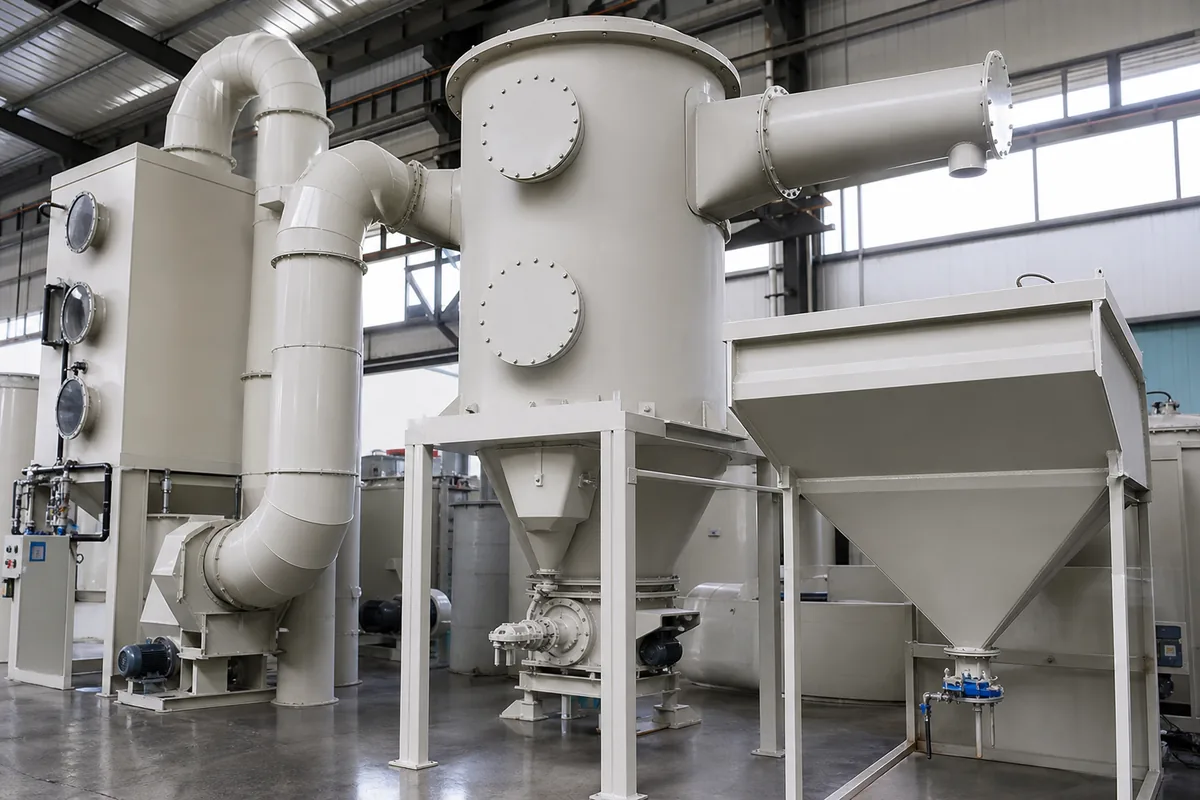
For large adsorbers, vacuum unloading can reduce dust and manual labor. For smaller PP activated carbon towers, manual unloading through the bottom access port is common, but workers still need dust masks or respirators suitable for the hazard, gloves, eye protection, and local exhaust ventilation.
Step 4: Estimate when carbon becomes “spent”
The best disposal plan starts before replacement. If carbon is changed too early, the plant pays for unnecessary carbon handling. If changed too late, emissions may exceed limits or odors may escape.
Use one or more of these methods:
- Breakthrough monitoring: Measure outlet concentration. Replace carbon when outlet reaches a set percentage of inlet, often 5–10%, depending on the permit or internal limit.
- Operating hour tracking: Useful for stable processes, but less accurate when inlet concentration changes.
- Mass balance: Estimate adsorbed mass from airflow, concentration, and hours.
- Bed temperature monitoring: Useful for high VOC loading or exothermic adsorption risk.
- Carbon sampling: Lab analysis of different bed depths can show remaining adsorption capacity.
For fixed-bed gas adsorbers, empty bed contact time is usually selected in the range of 0.5–3.0 seconds for VOC and odor service. Low concentration odor polishing may use shorter contact time; difficult VOCs or strict outlet limits may need longer contact time or deeper beds. Superficial gas velocity is commonly 0.2–0.6 m/s through granular carbon beds. These are rules of thumb; the correct design depends on contaminant type, concentration, humidity, temperature, and required outlet concentration.
High humidity reduces VOC adsorption capacity, especially when relative humidity is above 70%. If the exhaust contains mist, droplets, or sticky aerosol, install pre-filtration or a demister before the carbon bed. Wet or fouled carbon may be difficult to regenerate and may need disposal instead.
Practical next step
Create a simple spent carbon file for each adsorber: carbon type, carbon mass, process chemicals, operating hours, monitoring data, and previous disposal method. Before the next replacement, send this information to your waste contractor or regeneration company and ask what sampling, packaging, and transport requirements apply.
If you are designing a new activated carbon adsorber, include safe unloading access, sampling ports, temperature points, and enough space for sealed containers. These details make future spent activated carbon disposal safer and easier to manage.