Why Packing Choice Matters in a Wet Scrubber
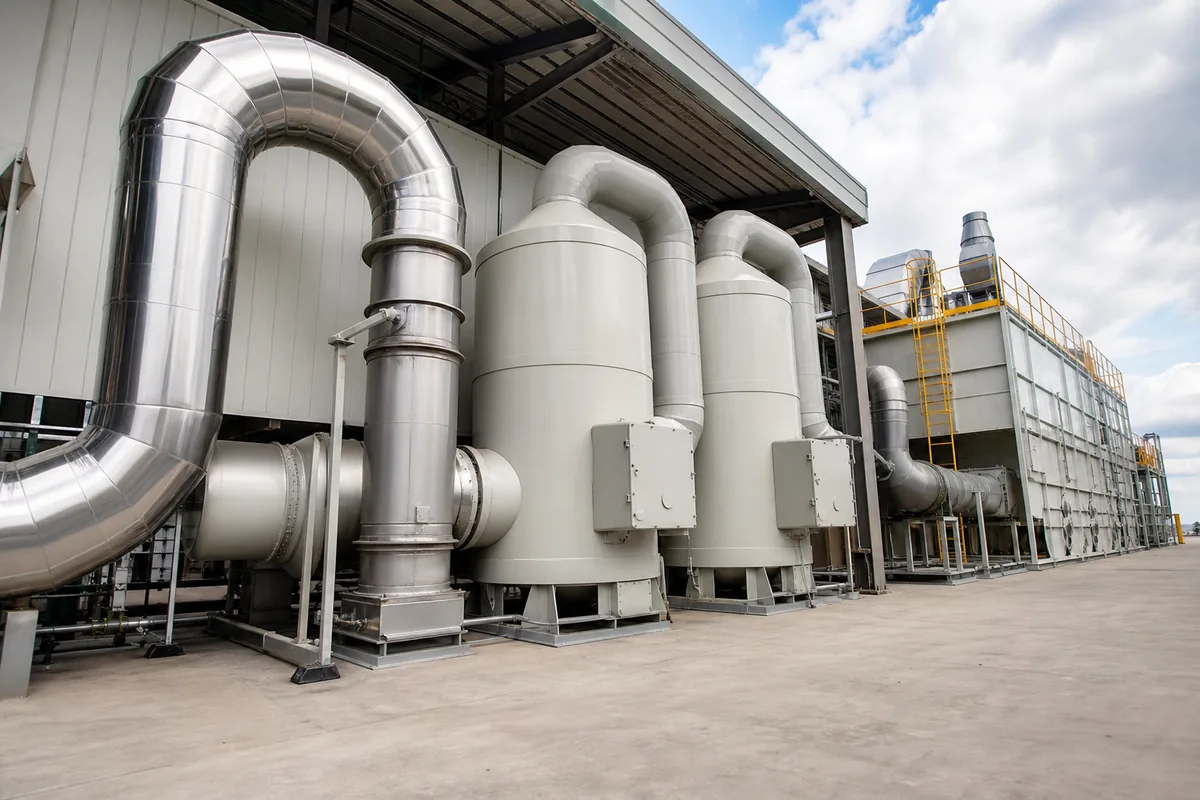
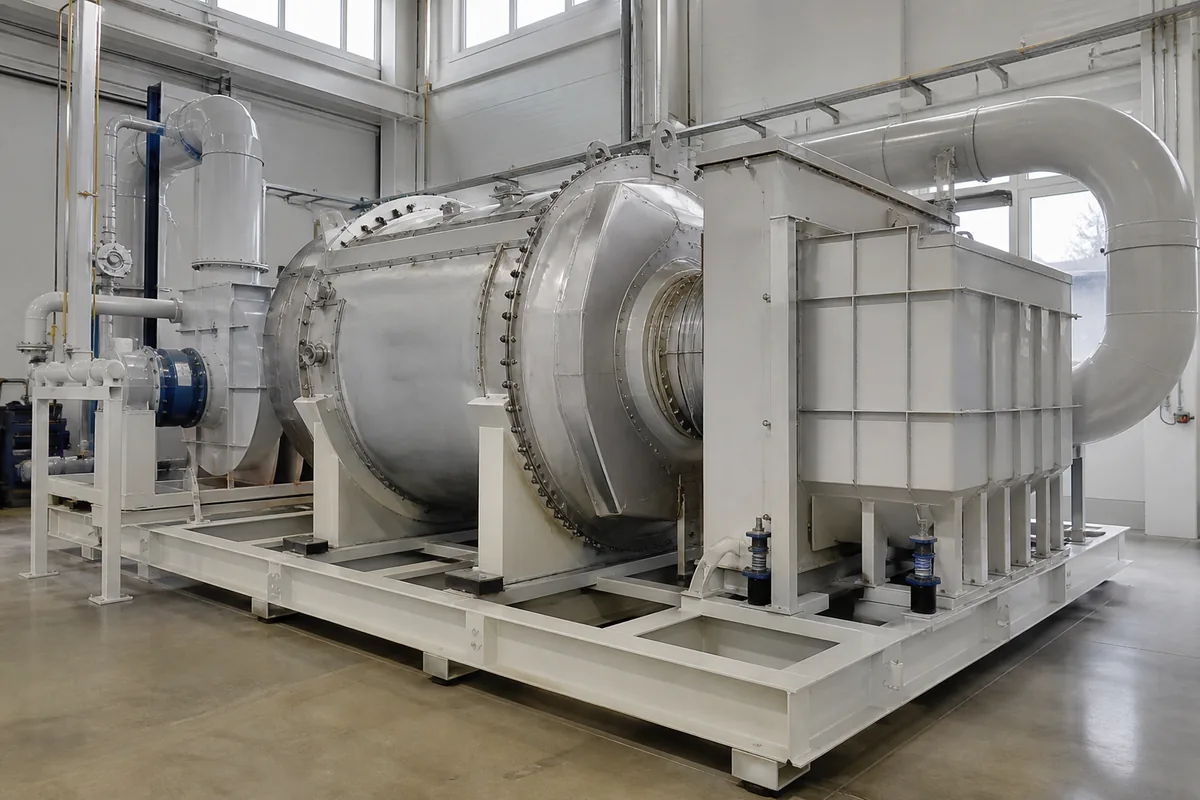
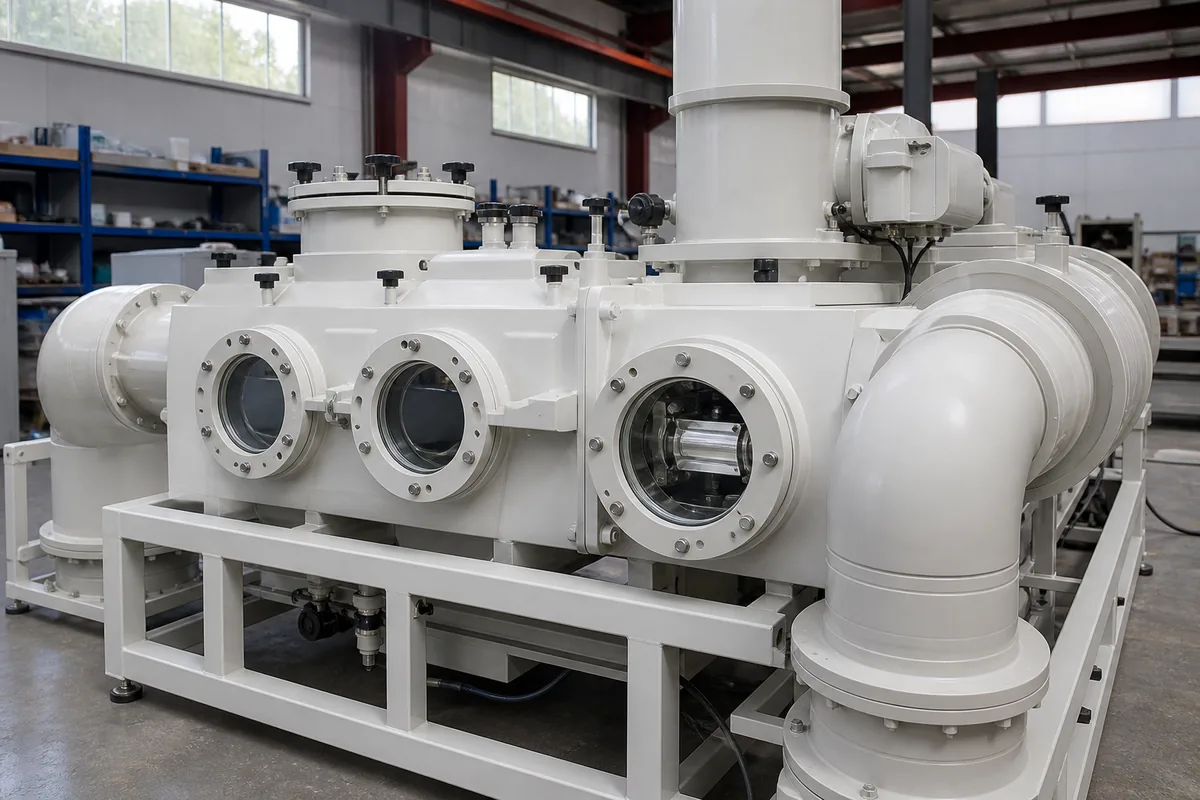
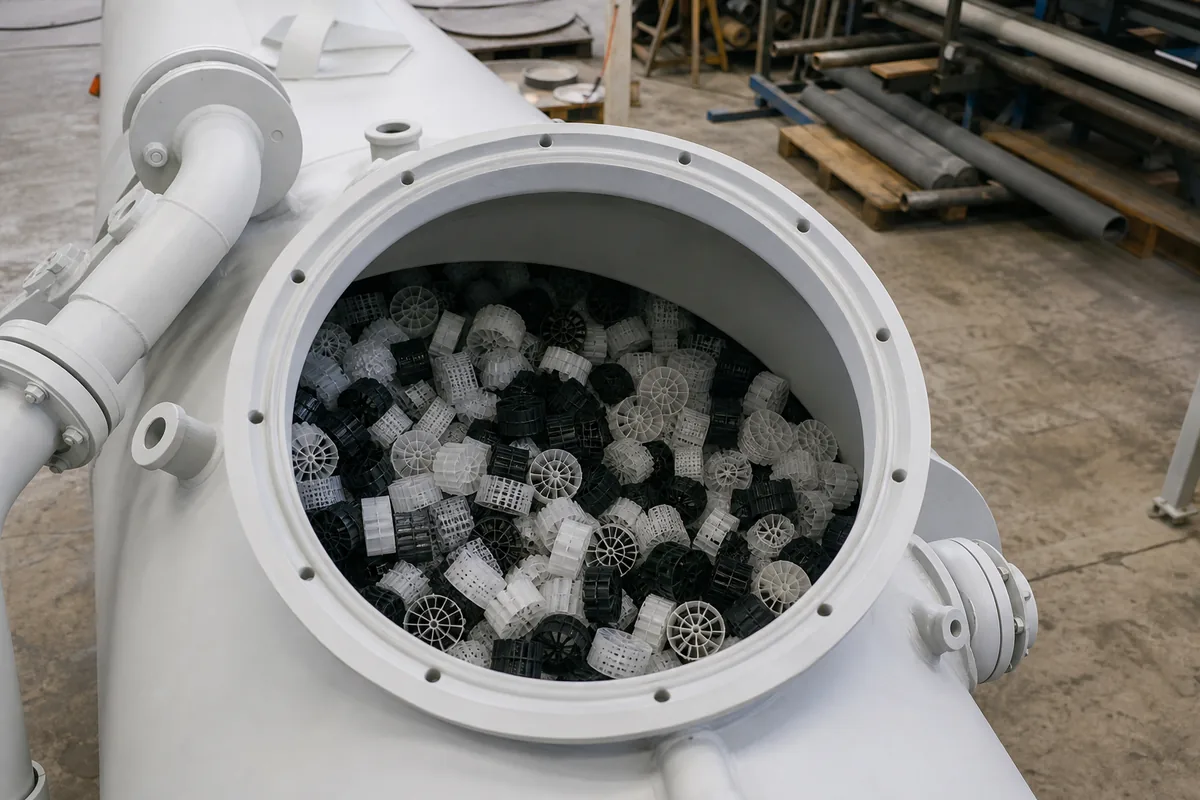
In a packed wet scrubber, the packing media creates contact area between polluted gas and scrubbing liquid. The fan pushes gas upward or horizontally through the packed bed, while liquid flows over the media surface. Good packing gives high gas-liquid contact, stable liquid distribution, and acceptable pressure drop.
For many PP wet scrubbers used in acid mist, alkali mist, ammonia, chlorine, HCl, HF, H₂S, and some water-soluble VOC applications, the common low-cost packing choices are:
- Pall rings
- Hollow balls
- Saddle-type packing, often called Intalox saddles or similar ceramic/plastic saddle shapes
This scrubber packing media comparison focuses on practical selection, not theory only. The best choice depends on gas flow, contaminant solubility, required removal efficiency, available scrubber height, liquid quality, and maintenance conditions.
A useful starting rule is:
Higher surface area usually improves mass transfer, but may increase pressure drop and fouling risk.
For PP wet scrubbers, typical packed bed heights are:
- Acid/alkali mist control: 500–1,200 mm
- Soluble gas absorption: 1,000–2,000 mm
- Difficult absorption or high efficiency duty: multiple stages or 2,000 mm+ total packing height
Packing type is only one part of the system. Spray nozzle layout, liquid-to-gas ratio, pH control, demister design, and fan pressure margin are equally important.
Basic Comparison of Pall Rings, Hollow Balls and Saddles
The table below gives practical differences for plastic packing normally used in PP scrubbers. Exact values depend on size, material, supplier, molding design, and installation quality.
| Item | Pall Rings | Hollow Balls | Saddles |
|---|---|---|---|
| Common plastic sizes | 25, 38, 50, 76 mm | 25, 38, 50 mm | 25, 38, 50, 76 mm |
| Typical specific surface area | Medium to high | Low to medium | Medium to high |
| Pressure drop | Medium | Low | Medium |
| Liquid distribution | Good | Fair | Good |
| Mass transfer efficiency | Good | Fair to moderate | Good |
| Fouling resistance | Moderate | Good | Moderate |
| Mechanical strength | Good if quality molded | Moderate | Good |
| Best use | General wet scrubbers | Simple mist washing, low pressure drop | Higher contact efficiency, absorption duty |
| Main limitation | Can block if solids are high | Lower efficiency per bed height | May have higher pressure drop than balls |
For most industrial PP scrubbers, 50 mm PP Pall rings are a common first choice. They give a reasonable balance of surface area, pressure drop, cost, and cleaning access. Hollow balls are often selected when the gas is dirty or the pressure drop must be very low. Saddles are useful where better liquid spreading and contact efficiency are needed, especially for gas absorption rather than simple mist capture.
A rough pressure drop range for clean plastic random packing is:
`text ΔP = 100 to 500 Pa per meter of packing `
This range is only a starting estimate. Pressure drop increases with:
- Higher gas velocity
- Smaller packing size
- Higher liquid flow rate
- Fouling, scale, or biological growth
- Uneven gas distribution
- Collapsed or crushed packing
For final fan selection, the engineer should calculate the full system pressure loss: ducting, scrubber inlet, packing, demister, outlet, elbows, stack, and safety margin.
Pall Rings: Balanced Choice for General Scrubbers
Pall rings are cylindrical rings with windows and internal fingers. Compared with simple Raschig rings, they offer better liquid spreading and lower pressure drop. In PP or other plastics, they are widely used in acid mist scrubbers, alkali scrubbers, and many chemical exhaust systems.
Typical applications include:
- HCl exhaust from pickling or chemical tanks
- HF or acid mist from surface treatment lines
- Ammonia absorption using acidic scrubbing liquid
- Alkali mist neutralization
- General laboratory or production exhaust washing
Common design values for Pall rings in vertical PP scrubbers:
- Packing size: 38 or 50 mm for most industrial scrubbers
- Gas velocity through tower section: 1.5–2.5 m/s for many applications
- Liquid-to-gas ratio: 1.5–4.0 L/m³ for acid/alkali gas absorption, depending on duty
- Packed bed height: 800–1,500 mm for normal chemical exhaust
- Spray density: often 8–20 m³/m²·h, depending on nozzle and process
For dirty gas, 50 mm or 76 mm Pall rings are safer than 25 mm rings. Smaller packing gives higher surface area but blocks more easily. If the exhaust contains dust, resin particles, crystals, or sticky organic mist, do not select small packing only for theoretical efficiency.
Advantages of Pall rings:
- Good general mass transfer performance
- Available in PP, PE, PVC, PVDF and other plastics
- Easy to replace and inspect
- Suitable for many gas-liquid absorption duties
- Reasonable pressure drop
Limitations:
- Fouling can occur if scrubbing liquid has suspended solids
- Poor liquid distribution reduces performance
- Small sizes may be difficult to clean after scaling
For many procurement projects, if process data is incomplete, Pall rings are often the safest standard option. However, “standard” does not mean universal. Always check gas composition, temperature, liquid chemistry, and maintenance access.
Hollow Balls: Low Pressure Drop and Better Anti-Fouling
Hollow balls are simple spherical packing elements. They may be smooth or have holes depending on design. In scrubbers, they are often used where low resistance and easy washing are more important than maximum mass transfer efficiency.
They are suitable for:
- Simple water spray washing
- Dusty exhaust with wet capture
- Low concentration acid or alkali mist
- Odor pre-washing before activated carbon
- Applications where fan pressure is limited
Because hollow balls have a more open bed structure, they usually create lower pressure drop than Pall rings or saddles of similar nominal size. They are less likely to compact tightly, and larger passages help reduce blockage.
Typical practical values:
- Packing size: 38–50 mm for small and medium scrubbers
- Gas velocity: 1.5–3.0 m/s, if mist carryover is controlled
- Packed bed height: 500–1,200 mm for washing and mist reduction
- Pressure drop: often at the lower end of the 100–500 Pa/m range when clean
The main trade-off is efficiency. Hollow balls normally provide less effective wetted surface area. If the duty requires high removal of soluble gases such as HCl, NH₃, or SO₂, using hollow balls may require:
`text More packing height, higher liquid flow, or an additional scrubber stage `
Hollow balls are not a good choice when tower diameter is small and high removal efficiency is required in one short bed. They can work well as a first rough washing layer or in a scrubber designed mainly to protect downstream equipment, such as a fan, duct, or activated carbon adsorber.
For maintenance teams, hollow balls are attractive because they are easier to flush and remove. If the plant has hard water, high salt content, or frequent solids carryover, this can be important.
Saddles: Good Contact and Liquid Spreading
Saddle packing has a curved shape that promotes liquid spreading and gas-liquid contact. Plastic saddles are common in chemical absorption towers and can be used in PP scrubbers when better mass transfer is needed.
Compared with Pall rings, saddles often give good wettability and stable liquid distribution. Compared with hollow balls, they usually provide higher effective contact area. They are useful where the process needs stronger absorption but the tower height is limited.
Typical applications include:
- Acid gas absorption with higher outlet requirement
- Ammonia or amine odor scrubbing
- Chlorine or sulfur compound treatment, depending on reagent design
- Multi-stage scrubbers where each stage has controlled pH or ORP
- Scrubbers with limited diameter or height where efficiency is important
Typical design ranges:
- Packing size: 38 or 50 mm for industrial PP scrubbers
- Gas velocity: 1.2–2.2 m/s for many absorption duties
- Liquid-to-gas ratio: 2–6 L/m³ depending on solubility and reaction speed
- Packed bed height: 1,000–2,000 mm for stronger absorption duty
Saddles can have medium pressure drop. In high liquid flow applications, pressure loss should be checked carefully. If pressure drop is underestimated, the fan may not deliver the required air volume after installation.
Selection notes:
- Use larger saddle size if scaling or solids are expected.
- Use smaller size only when gas is clean and high efficiency is needed.
- Provide good support plates because saddles can load unevenly if dumped carelessly.
- Include inspection ports for checking packing condition.
Saddles are not always better than Pall rings. In many normal acid mist scrubbers, the difference may not justify changing from a standard Pall ring design. They are more valuable when absorption performance is the limiting factor.
Practical Selection Rules for Engineers
For a first scrubber packing media comparison during project planning, the following rules are useful:
- If the gas is relatively clean and the duty is general acid/alkali absorption: start with 50 mm PP Pall rings.
- If pressure drop must be very low or fouling risk is high: consider 50 mm hollow balls.
- If removal efficiency is difficult and tower height is limited: consider 38–50 mm saddles or Pall rings with increased bed height.
- If solids, crystals, or sticky mist are present: avoid 25 mm packing unless there is strong pre-filtration and regular cleaning.
- If the gas temperature is high: check the plastic material limit, not only the packing shape. PP is commonly used below about 80–90°C in many scrubber duties, but chemical resistance and mechanical strength decrease with temperature.
- If oxidizing chemicals are used: confirm material compatibility for packing, tank, pump, piping, and nozzles.
For a rough tower sizing check:
`text Tower cross-sectional area A = Gas flow Q / Gas velocity V `
Where:
A= m²Q= gas flow in m³/sV= design gas velocity in m/s
Example: for 12,000 m³/h exhaust:
`text Q = 12,000 / 3,600 = 3.33 m³/s If V = 2.0 m/s A = 3.33 / 2.0 = 1.67 m² Equivalent tower diameter ≈ 1.46 m `
Then check packing height, liquid flow, nozzle coverage, demister velocity, and total pressure drop. The packing cannot correct a tower that is too small, a spray system that is uneven, or a wrong chemical dosing strategy.
Practical Next Step
Before choosing Pall rings, hollow balls, or saddles, prepare these process data: gas flow rate, gas temperature, contaminants and concentration, target outlet requirement, dust or mist content, available scrubber height, scrubbing liquid chemistry, and fan pressure limit.
Send these data to your scrubber supplier and ask for a packing recommendation with:
- Packing type and size
- Bed height
- Estimated pressure drop
- Liquid flow rate
- Material selection
- Maintenance access plan
This will give a more reliable selection than choosing packing only by catalogue surface area.