Why the Adsorbent Choice Depends on the Gas
When engineers compare molecular sieve vs activated carbon, the correct answer is rarely “one is better.” The right choice depends on the target gas, humidity, temperature, concentration, required outlet level, regeneration method, and safety risk.
Both materials remove gases by adsorption, but they work differently:
- Activated carbon has a large pore volume and non-polar surface. It is strong for many organic vapours, odours, solvents, and some acid gases after impregnation.
- Molecular sieve is a crystalline aluminosilicate or synthetic zeolite with uniform pore openings, commonly 3A, 4A, 5A, and 13X. It is strong for small polar molecules, water, CO₂, H₂S, NH₃, and gas drying or purification duties.
A simple rule of thumb:
Use activated carbon first for medium to high molecular weight VOCs. Use molecular sieve first for water, CO₂, and small polar gases where selective pore size is important.
However, in real exhaust systems, gas mixtures are common. For example, an electronics plant may have IPA, acetone, acid mist, ammonia, and moisture in one exhaust header. In such cases, a single adsorbent may not give stable performance. A wet scrubber, demister, pre-filter, cooling section, and adsorption bed may all be needed.
Working Principles and Key Design Differences
Activated carbon is usually made from coconut shell, coal, or wood. For industrial gas treatment, common forms include granular activated carbon, pellet carbon, and honeycomb carbon. Its typical surface area is 800–1,500 m²/g, with a broad pore size distribution. It is effective for many VOCs because organic molecules are attracted to the carbon surface.
Molecular sieve has a lower total pore volume than activated carbon, but the pore size is controlled. Common types include:
- 3A: mainly for water removal; excludes many larger molecules
- 4A: water, ammonia, some small polar molecules
- 5A: normal paraffins, some gas separation duties
- 13X: CO₂, H₂S, larger polar molecules, air purification
For adsorption vessel design, several practical values are useful:
| Parameter | Activated Carbon | Molecular Sieve |
|---|---|---|
| Typical bulk density | 450–650 kg/m³ | 600–750 kg/m³ |
| Common pellet size | 3–4 mm, 4–6 mm | 1.5–3 mm, 3–5 mm |
| Typical superficial gas velocity | 0.2–0.6 m/s | 0.1–0.3 m/s |
| Typical empty bed contact time | 0.5–3 s for VOC polishing; longer for low outlet limits | 1–6 s depending on gas and regeneration |
| Moisture sensitivity | Medium to high, depending on VOC | High for many duties; water competes strongly |
| Regeneration | Steam, hot air, nitrogen, vacuum, or replacement | Hot dry gas, vacuum, pressure swing, or replacement |
| Strong applications | VOCs, odour, solvent vapours | Drying, CO₂ removal, H₂S/NH₃ polishing, gas purification |
Pressure drop must also be checked. For pellet beds, many designers keep pressure drop below 1,000–2,500 Pa per vessel for ventilation systems. Higher pressure drop increases fan power and may reduce capture performance at hoods.
A basic sizing estimate is:
`text Bed volume (m³) = Gas flow rate (m³/s) × EBCT (s) `
For example, if exhaust flow is 10,000 m³/h:
`text 10,000 m³/h ÷ 3,600 = 2.78 m³/s If EBCT = 1.5 s Bed volume = 2.78 × 1.5 = 4.17 m³ `
This is only a starting point. Final sizing needs adsorption capacity, inlet concentration, operating hours, breakthrough limit, temperature, humidity, and safety factors.
Comparison for Specific Gases
The table below gives a practical starting point for common gases. Actual performance depends on concentration, humidity, temperature, and required outlet concentration.
| Gas or Vapour | Better Starting Choice | Engineering Notes |
|---|---|---|
| Toluene, xylene, benzene | Activated carbon | Good adsorption because of higher molecular weight and organic character. Check fire risk at high concentration. |
| IPA, ethanol, methanol | Activated carbon, sometimes molecular sieve | Alcohols are adsorbed by carbon but water reduces capacity. Molecular sieve may be used for dehydration or dry gas polishing. |
| Acetone, MEK | Activated carbon | Good capacity, but ketones can create heat during adsorption. Monitor bed temperature. |
| Dichloromethane, chloroform | Activated carbon, special carbon | Capacity varies. Desorption and disposal must be reviewed carefully. |
| CO₂ | Molecular sieve, especially 13X | Carbon has limited selectivity. 13X is common for CO₂ removal in dry gas. Water must be removed or considered. |
| Water vapour | Molecular sieve 3A or 4A | Strong choice for gas drying. Activated carbon loses VOC capacity when wet. |
| Ammonia | Impregnated activated carbon or molecular sieve | Plain carbon is weak. Acid-impregnated carbon or suitable zeolite may be used. Humidity affects results. |
| Hydrogen sulfide | Impregnated activated carbon or molecular sieve | For odour control, impregnated carbon is common. For gas purification, molecular sieve may be used with regeneration. |
| Chlorine | Impregnated activated carbon or wet scrubber | For high or variable concentration, alkaline wet scrubbing is often safer than adsorption alone. |
| HCl, HF, SO₂ | Wet scrubber first; impregnated carbon only for polishing | Acid gases are usually treated by caustic or water scrubbing. Adsorbent beds can be damaged by moisture and acid. |
| Siloxanes | Activated carbon or special media | Common in biogas. Moisture and hydrocarbons reduce life. Pre-treatment is important. |
| Formaldehyde | Impregnated carbon or chemical media | Plain carbon may have low capacity. Chemical reaction media may be needed. |
| Hydrogen, nitrogen, oxygen | Usually not carbon; molecular sieve only for special separation | These gases are weakly adsorbed under normal ventilation conditions. PSA design is a separate process. |
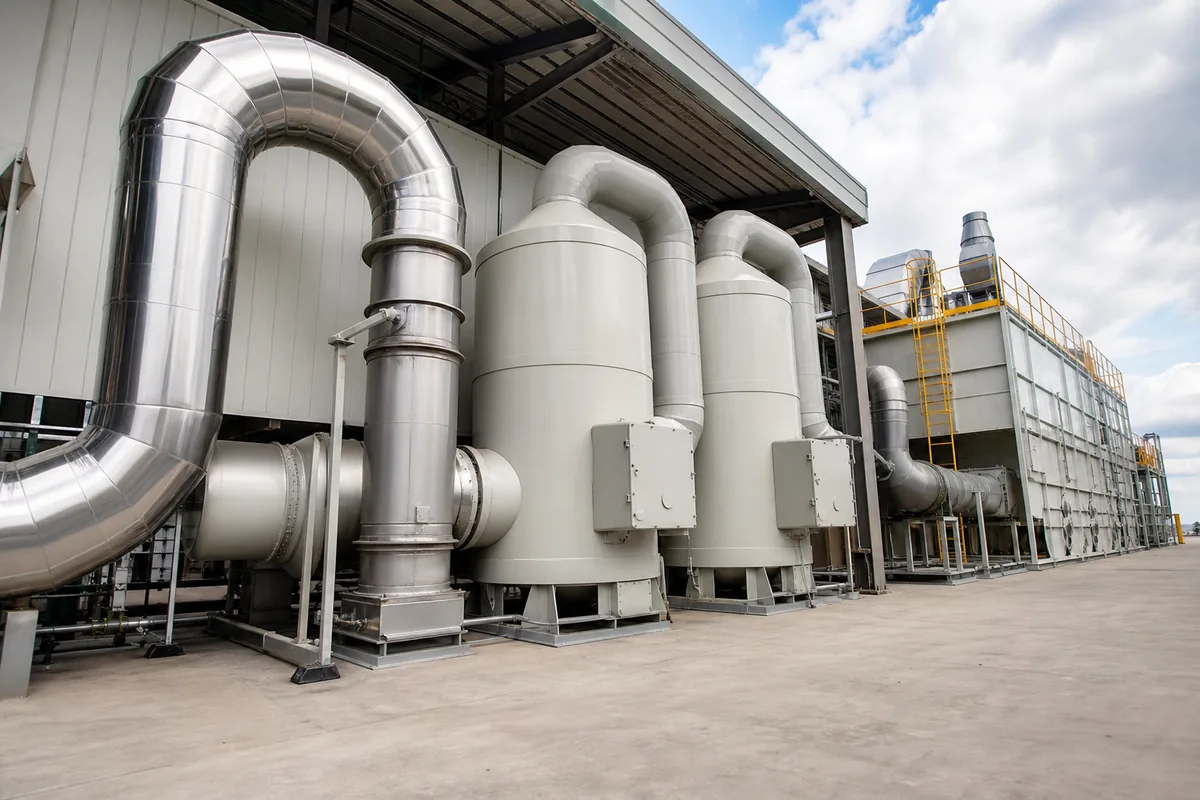
For many factory exhaust systems, activated carbon is used after a PP wet scrubber when acid or alkaline gases must be removed first. The scrubber protects the carbon bed from corrosive gas, mist, and soluble pollutants. A demister is important because liquid droplets can block pores and increase pressure drop.
Humidity, Temperature, and Safety
Humidity is one of the main reasons that laboratory adsorption data fails in the field. Water competes for adsorption sites and can fill pores. For activated carbon VOC systems:
- Keep relative humidity preferably below 60–70% when possible.
- Install a good demister after wet scrubbing.
- Avoid visible water droplets entering the carbon bed.
- Consider gas cooling only if it does not create condensation inside the bed.
Temperature also matters. Adsorption capacity decreases as temperature rises. A rough rule is that for many VOCs, capacity may drop significantly when gas temperature increases from 25°C to 45°C. The exact loss depends on the compound and carbon type.
Safety must be reviewed for VOC adsorption. Activated carbon can heat up because adsorption is exothermic. Some compounds, such as ketones, aldehydes, and unsaturated hydrocarbons, may increase hot-spot risk. Practical controls include:
- Keep inlet VOC concentration well below the lower explosive limit. Many plants use <25% LEL as a conservative operating target, but local rules may differ.
- Install temperature monitoring in large carbon beds.
- Avoid sudden high-concentration solvent dumping into ventilation ducts.
- Use pre-filtration to remove dust and oil mist.
- Provide bypass, isolation dampers, or fire protection measures where required by the risk assessment.
- Do not use activated carbon as the only protection for unknown solvent mixtures without testing.
Molecular sieve can also release heat during adsorption, especially during water adsorption. Regeneration gas temperature may be 150–300°C depending on sieve type and duty. Vessel seals, insulation, and thermal expansion must be considered.
Regeneration, Replacement, and Life Estimation
For small or medium ventilation systems, activated carbon is often replaced after breakthrough instead of regenerated on site. For larger solvent recovery or continuous VOC systems, regeneration may be considered.
A simplified carbon life estimate is:
`text Adsorbent life (h) = (Carbon mass kg × working capacity kg pollutant/kg carbon) ÷ (Gas flow m³/h × inlet concentration kg/m³) `
Example:
`text Carbon mass = 1,000 kg Working capacity = 0.10 kg VOC/kg carbon Gas flow = 8,000 m³/h Inlet VOC = 100 mg/m³ = 0.0001 kg/m³
VOC load = 8,000 × 0.0001 = 0.8 kg/h Usable adsorption = 1,000 × 0.10 = 100 kg Estimated life = 100 ÷ 0.8 = 125 h `
This example shows why low concentration does not always mean long life if airflow is large. Working capacity is not the same as laboratory maximum capacity. For design, typical working capacity for VOC carbon may range from 5–25% by weight, depending heavily on VOC type, humidity, and breakthrough limit.
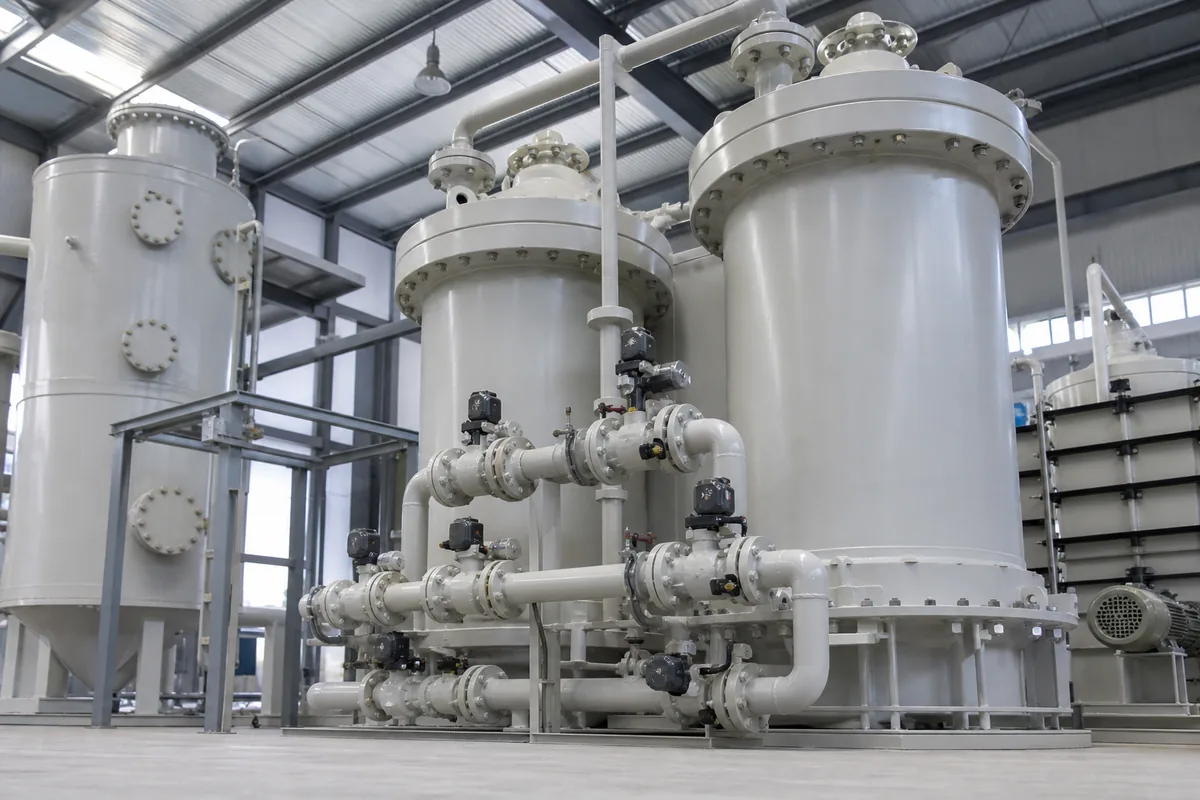
For molecular sieve, life depends on whether the bed is regenerated. In drying and CO₂ removal systems, molecular sieve is commonly used in twin-bed or multi-bed systems. One bed adsorbs while another regenerates. If the sieve is not regenerated, replacement can be frequent because water loading is high. Molecular sieve also needs protection from:
- Liquid water
- Oil aerosol
- Dust
- Acid mist
- Polymerizing organics
- Strong thermal shock
In both carbon and sieve systems, sampling ports before and after the bed are useful. For VOCs, PID measurement can give fast trend data, but compound-specific laboratory analysis may be needed for compliance or detailed performance checks. For H₂S, NH₃, or acid gases, use gas-specific tubes or sensors suitable for the concentration range.
Practical Next Step
Before choosing molecular sieve vs activated carbon, prepare a simple gas data sheet:
- Gas flow rate: normal, minimum, and maximum, in m³/h
- Target gases and inlet concentration, in mg/m³ or ppmv
- Temperature and relative humidity
- Dust, mist, oil, or acid content
- Required outlet limit or removal efficiency
- Operating hours per day
- Whether regeneration is required or replacement is acceptable
- Available space and allowable pressure drop
With this information, an equipment supplier can check whether the system should use activated carbon, molecular sieve, impregnated media, wet scrubbing, or a combined process. For mixed industrial exhaust, the safest design often starts with removing dust, mist, and corrosive gases first, then using the adsorption bed only for the pollutants it can reliably handle.